
20 Nov Clipping Path Service Pricing: How Much Should You Pay Per Image in 2026?
Clipping Path Service Pricing: How Much Should You Pay Per Image in 2026?
“How much does a clipping path cost?” is the wrong question. The right question is: “What is the total cost per usable image?”
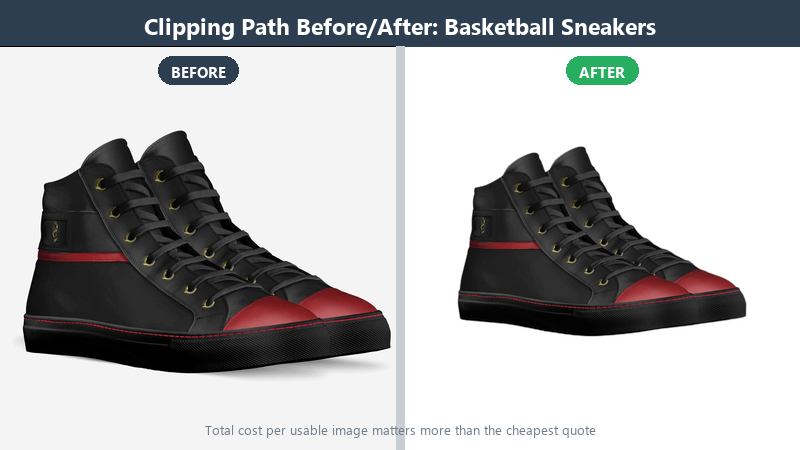
A $0.15 cutout that needs revisions, eats edges, and requires a shadow reshoot costs more than a $0.40 image that arrives correct on the first try. Here’s how clipping path pricing actually works, what you should pay, and how to spot a bad quote.
Typical Clipping Path Price Ranges (2026)
| Service Type | Typical Price Per Image | Best For |
|---|---|---|
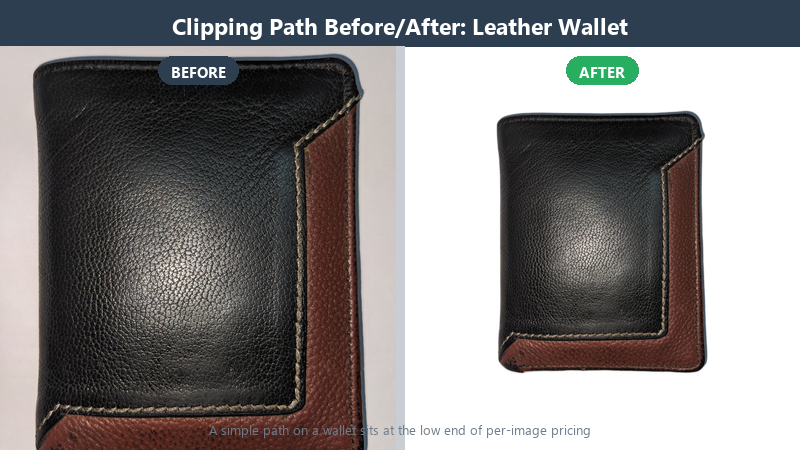
| Simple clipping path | ~$0.40 | Boxes, packaging, bottles, electronics |
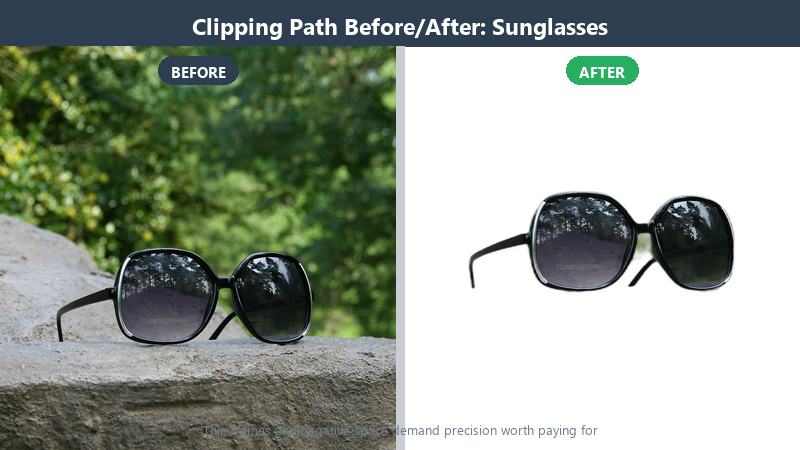
| Hair and translucent masking | ~$0.80 | Sheer fabric, fur, hair, smoke, mesh |
| Complex clipping path | ~$2.00 | Shoes, handbags, glass, curved surfaces |
| Raster to vector | ~$3.00 | Logos, illustrations, line art |
What Drives the Price?
- Complexity of the edge. Straight lines are fast; curves, holes, and fine details take time.
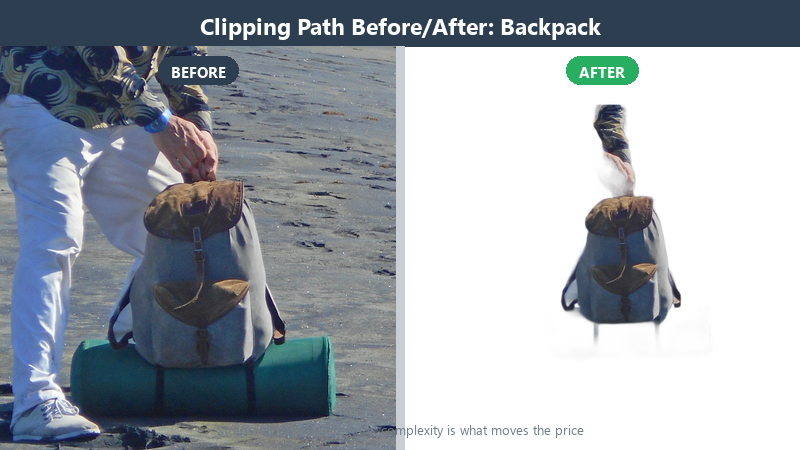
- Translucency and fine detail. Hair, lace, and sheer fabric require channel masking, not just a path.
- Volume. Bulk catalog work often gets discounted rates.
- Turnaround. 24-hour delivery costs more than two-week delivery.
- Additional services. Shadow work, color correction, and retouching are priced separately.
Why “Contact Us for a Quote” Wastes Your Time
Some clipping path providers refuse to publish prices, forcing you to email and wait. That hides the real question and slows your decision. Transparent pricing lets you budget, compare, and move fast — which is exactly what e-commerce sellers need.
The Real Metric: Cost Per Usable Image
Price per image is a starting point, not the end. Consider:
- Revision policy — free revisions or extra cost?
- Quality control — one check or two?
- Turnaround speed — does it match your catalog deadline?
- Consistency — will image 1 match image 900?
A provider that revises until it’s right and QC’s every image twice is cheaper in the long run, even if the per-image rate is higher.
How an Editor Prices Your Image in Ten Seconds
Quoting feels mysterious until you see the checklist an experienced estimator actually runs. Edge count: a deodorant stick has one silhouette; a road bike has fifty components. Curve density: long sweeps are faster to draw than tight scrollwork. Holes: every handle gap and buckle loop is a second path. Translucency: netting, smoke, or a lace hem means masks on top of paths. Background chaos: a busy set forces precision work even around a simple product. Finally, the shadow spec — a natural contact shadow is minutes; a floating reflection study is an hour.
Add those up and an image lands itself in simple, mid, or complex. That is why honest providers can price from a thumbnail most of the time — and why they ask for your five hardest samples before signing a rate card. The estimator is not stalling. They are running the checklist so the price does not change after you commit.
Three Real Budgets at Published Rates
The photographer’s portfolio refresh: 50 images, all simple. Fifty box-and-bottle shots at $0.40 comes to $20. Less than a pizza, and the whole portfolio sits consistently on white.
The growing store: 1,000 SKUs, mixed. Say 600 simple ($240), 300 hair-and-translucent ($240 at $0.80), 100 complex ($200 at $2.00). Total: $680 — an average of 68 cents per sellable image. That is the number to compare against one returned order.
The marketplace batch: 10,000 images before a season launch. The same mix at list rates lands near $6,800. At that volume, a transparent shop will talk discounts, turnaround tiers, and reserved editor capacity openly — because the numbers are big enough that honesty is cheaper than surprises.
Notice what these budgets assume: the price is correct the first time. Every revision round you avoid is money these tables never show.
Where Your Dollar Actually Goes
A per-image rate is not salary plus profit. On a typical simple-path job, the largest slice is editor minutes — drawing, refining, exporting. Then comes the second checker: QC is a real person with real hours, and it is the line item that separates professional shops from hopeful ones. Project management takes a slice — intake, spec enforcement, delivery, and the conversation when something is ambiguous. Infrastructure is small but real: secured storage, backups, versioned hand-offs. The last slice is the revisions reserve: money set aside so that “unlimited revisions” is a promise the company can keep without flinching.
When a quote comes in absurdly low, one of these slices has been deleted. Usually it is QC. You will not see the saving — you will see the halos.
Negotiating Without Getting Burned
Volume deserves a discount, and any honest shop will build one. Ask for the rate card at your real monthly volume, not your aspirational one — then lock it for a quarter so your budget and their staffing both survive contact with reality.
But negotiate scope, not just price. The dangerous move is awarding a catalog to the lowest bid and discovering the exclusions afterward: revisions billed, QC “included” as a single pass, rush fees on every deadline. The safe move is a paid pilot of one hundred mixed images with the contract terms attached. If the pilot returns clean, scale it. If it returns halos, you just saved a season.
One more tactic that works in your favor: send your five hardest images with the RFQ. Providers who quote confidently on hard work have nothing to hide.
When Per-Image Is Not the Right Model at All
Clipping paths price cleanly per image. Deep retouching does not — a ten-minute dust-off and a two-hour composite are different animals, so honest shops quote those hourly or per project. Raster-to-vector sits in between: artwork complexity decides, not size. If a provider tries to force everything onto one per-image grid, that is a sign they are selling you a number instead of looking at your files.
The model should follow the work. Ask what model your job actually fits, and listen carefully to whether the answer starts with your images or with their rate card.
The Hidden Costs Hiding Behind “Free” and “Cheap”
The invoice is the smallest part of what an image costs you. Consider the full ledger. Revision loops: every round is your team’s time writing feedback, their team re-editing, and a launch date sliding. Re-uploads: marketplaces re-index, and each fix is an operational ticket somebody pays for. Inconsistency tax: when fifty images drift, the store reads amateur, and that costs conversion in ways analytics will blame on everything else. Re-shoots: a clipped-away detail sometimes means photographing the product again — the most expensive line item in the entire pipeline, triggered by a half-pixel decision.
Run a honest comparison on your last bad batch. A “$0.15” cutout that consumed two revision rounds, one re-upload, and a week of launch delay has a real cost nobody printed on the quote. The $0.40 image that arrived correct — and correct across nine hundred siblings — was the cheap one. Published rates make the first number visible; total cost per usable image is the number that pays salaries.
Reading a quote, demand the boring line items in writing: what QC passes are included, what a revision round costs, what happens when an editor is ambiguous about your intent. Cheap is a price. Inexpensive is an outcome. Buy the outcome.
Reading a Rate Card Like an Editor
When a rate card lands in your inbox, most of it is standard. Three lines deserve your full attention. First, the tier definitions — a shop that defines “complex” by edge count and translucency is measuring; a shop that defines it by feel is negotiating later. Second, the revision clause — free and unlimited is the industry promise; read whether it applies to spec misses as well as taste changes. Third, the turnaround table — check whether the 24-hour promise covers your batch size or only a handful of images. Those three lines predict your actual invoice better than the headline prices do.
What You Should Actually Pay
Published pricing exists for a reason: so you know what you’re paying before you send your first image. Compare rates, but judge on total cost per usable image — not the cheapest cutout.
Our rates are published on the site — $0.40 and up, no quote-waiting games. Try two images free and see what ‘correct the first time’ actually looks like.

No Comments